Listing Plan
Creating a flexible subscription model that gives small property managers the power to compete.
CoStar
Responsive Web
Background
Problem overview
A one-size-fits-all model that didn’t fit everyone.
Apartments.com monetized through a tiered advertising model that offered property managers greater visibility and richer listings based on their chosen subscription level. Each plan was tied to a single property for the duration of a year-long commitment, giving larger apartment communities consistent exposure across their many vacancies.
But for smaller landlords managing just a few units, this model didn’t make sense. They might only have a handful of openings each year, yet they were locked into a costly annual plan that couldn’t transfer between properties.
This limitation meant that many small property owners, a valuable but underserved segment, either underutilized or completely avoided the platform.
The challenge was to reimagine the subscription model so it could adapt to smaller operations: one that maintained Apartments.com’s business goals while allowing property managers to flex their subscription between multiple listings as availability changed throughout the year.
The opportunity
Small landlords needed flexibility.
Through conversations with independent landlords, we discovered their challenge was control.
They wanted the ability to move their subscription between properties based on availability. The traditional one-property model couldn’t support that.
We saw a chance to rethink the experience entirely and build something that truly worked for them.

What I did
Over a two-month period, I partnered with three front-end developers and one product manager to design, test, and ship a responsive web experience that adapted to any screen.
Design & research process
1
Research
Interviewed small property owners to understand frustrations and priorities.
2
Design
Created high-fidelity responsive designs aligned with the Apartments.com system.
3
Validate
Conducted rapid usability testing to ensure intuitive navigation and clarity.
4
Document
Captured every spacing, component, and page detail in the handoff guide.
5
QA
Partnered with engineers to ensure accuracy and consistency across devices.
Every decision was made to give smaller property managers the flexibility they needed while keeping the visual and technical quality Apartments.com was known for.
Results
Outcomes


Process & Artifacts
Iterations and early sketches
Initial explorations focused on how property managers could see their available advertising slots at a glance. Early sketches mapped ways to organize data by property and quickly indicate where coverage could be reassigned.
Sketches
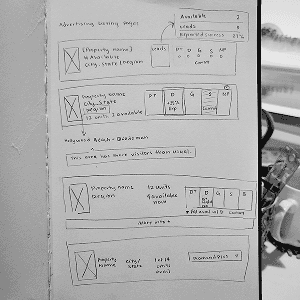
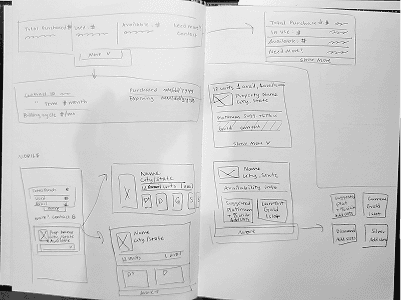
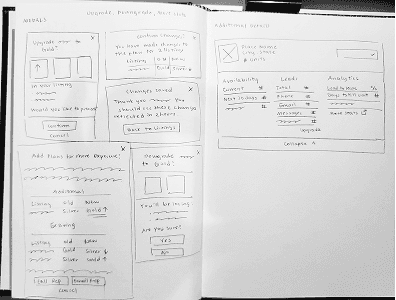
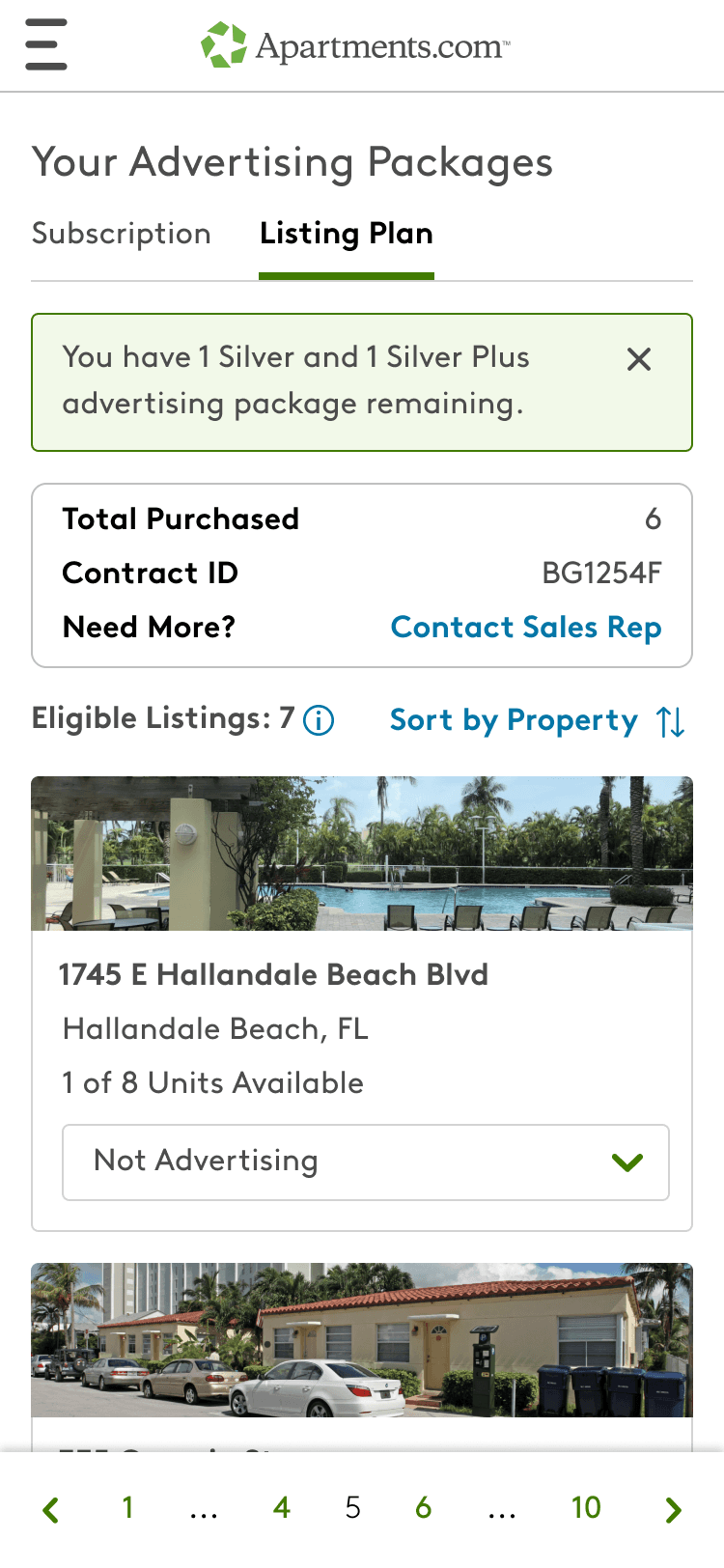
Early desktop and mobile designs
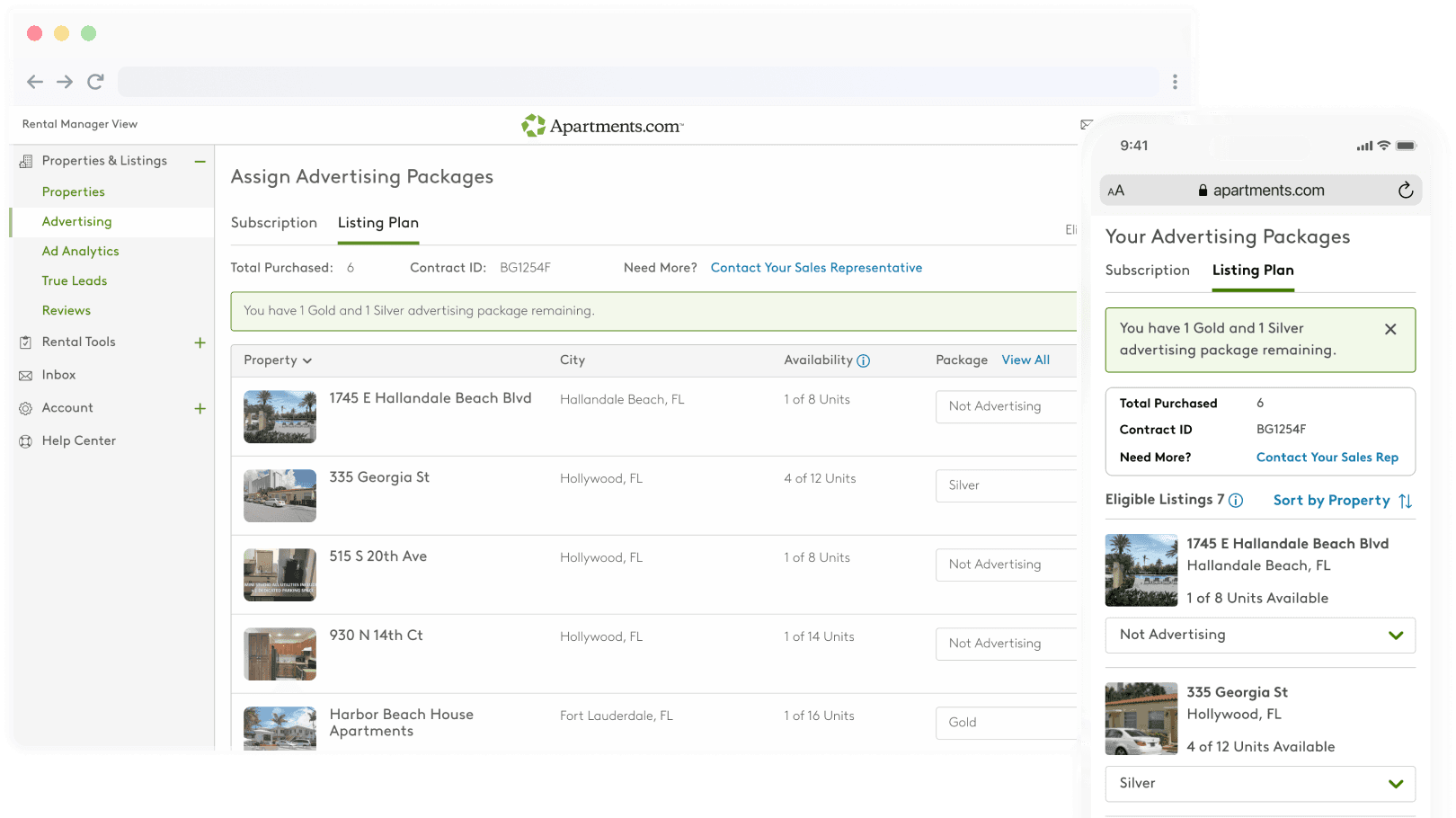
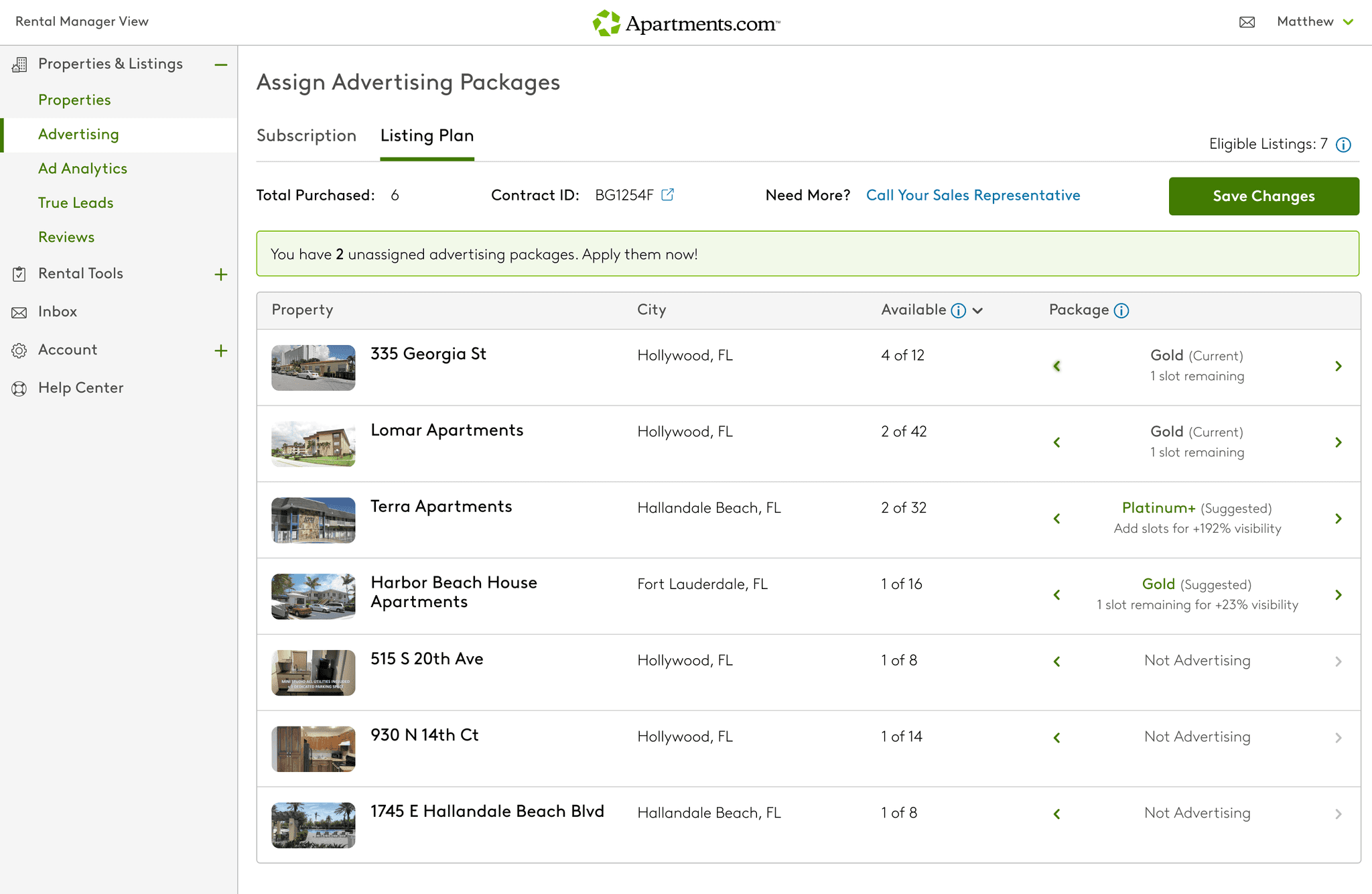
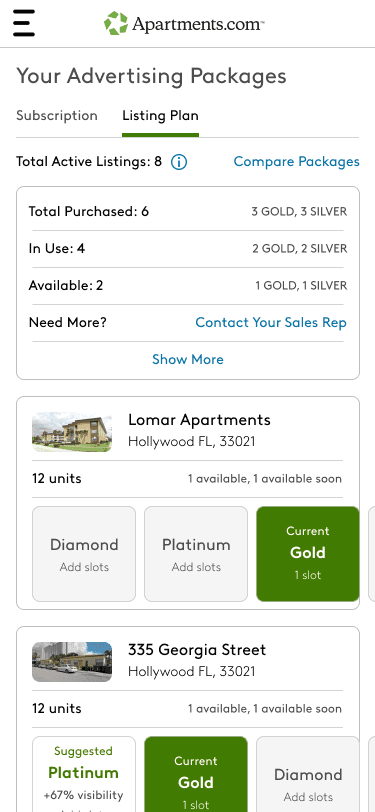
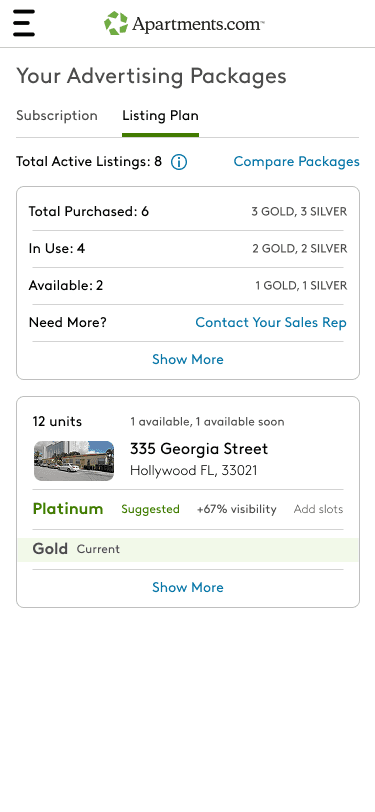
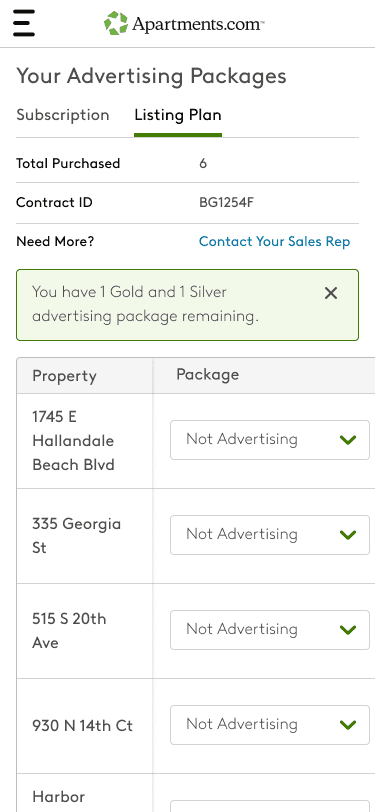
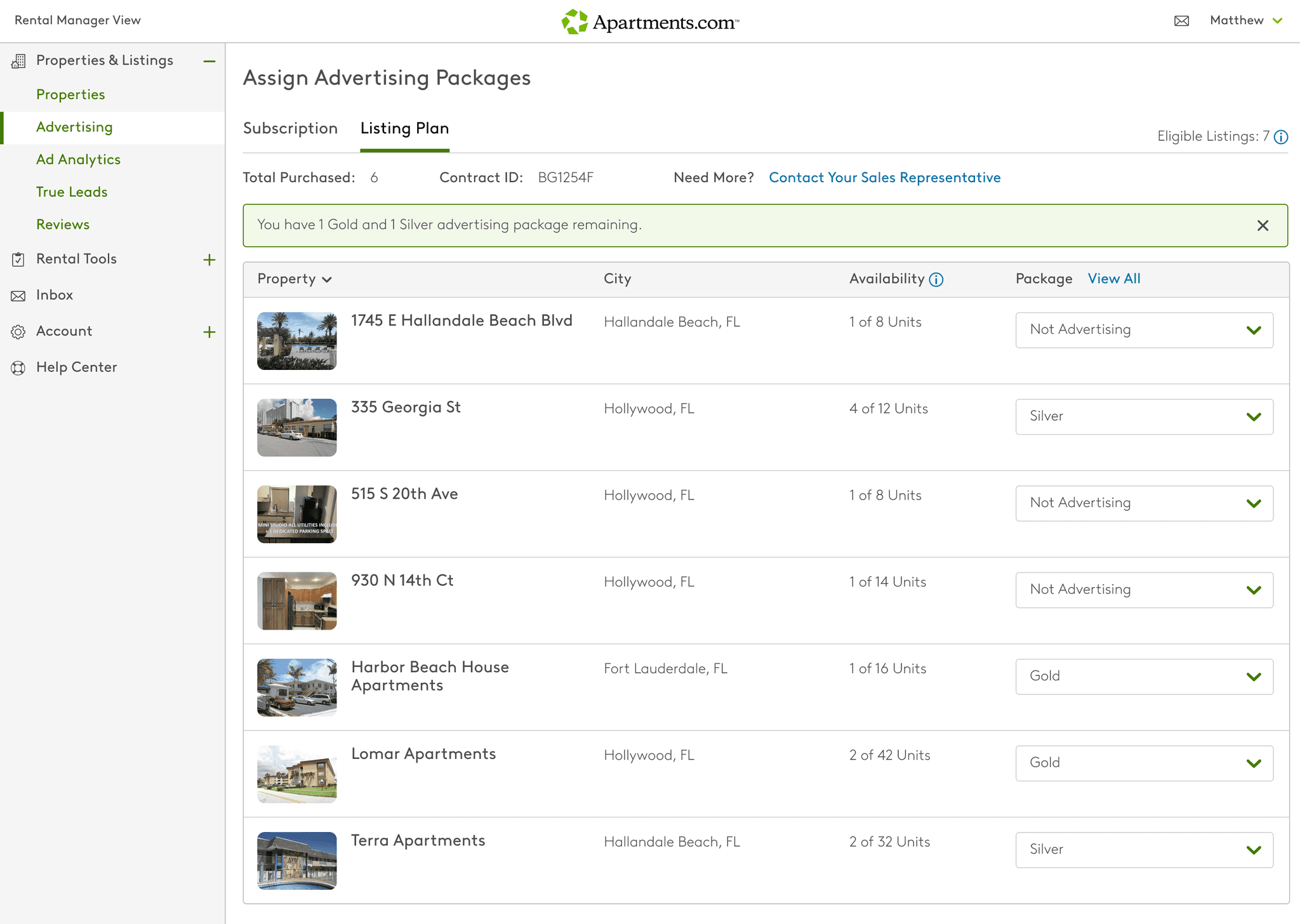
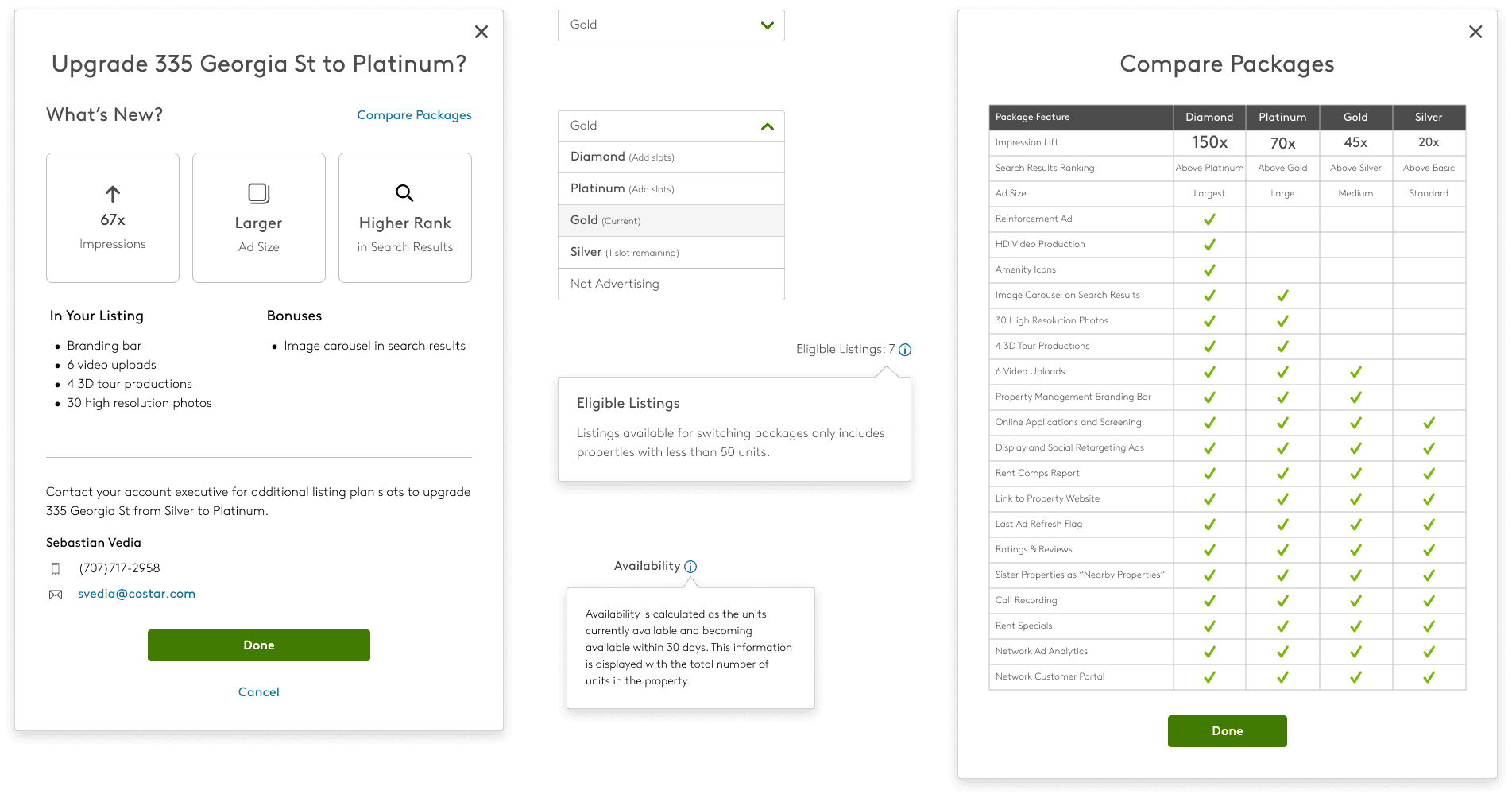
The main goal of this new feature was to inform users about their current subscription level and usage across their property. During the design phase, I spent multiple cycles exploring different ways to display their current advertising contract information, include an easy way to increase their advertising level, and switch packages between eligible properties.
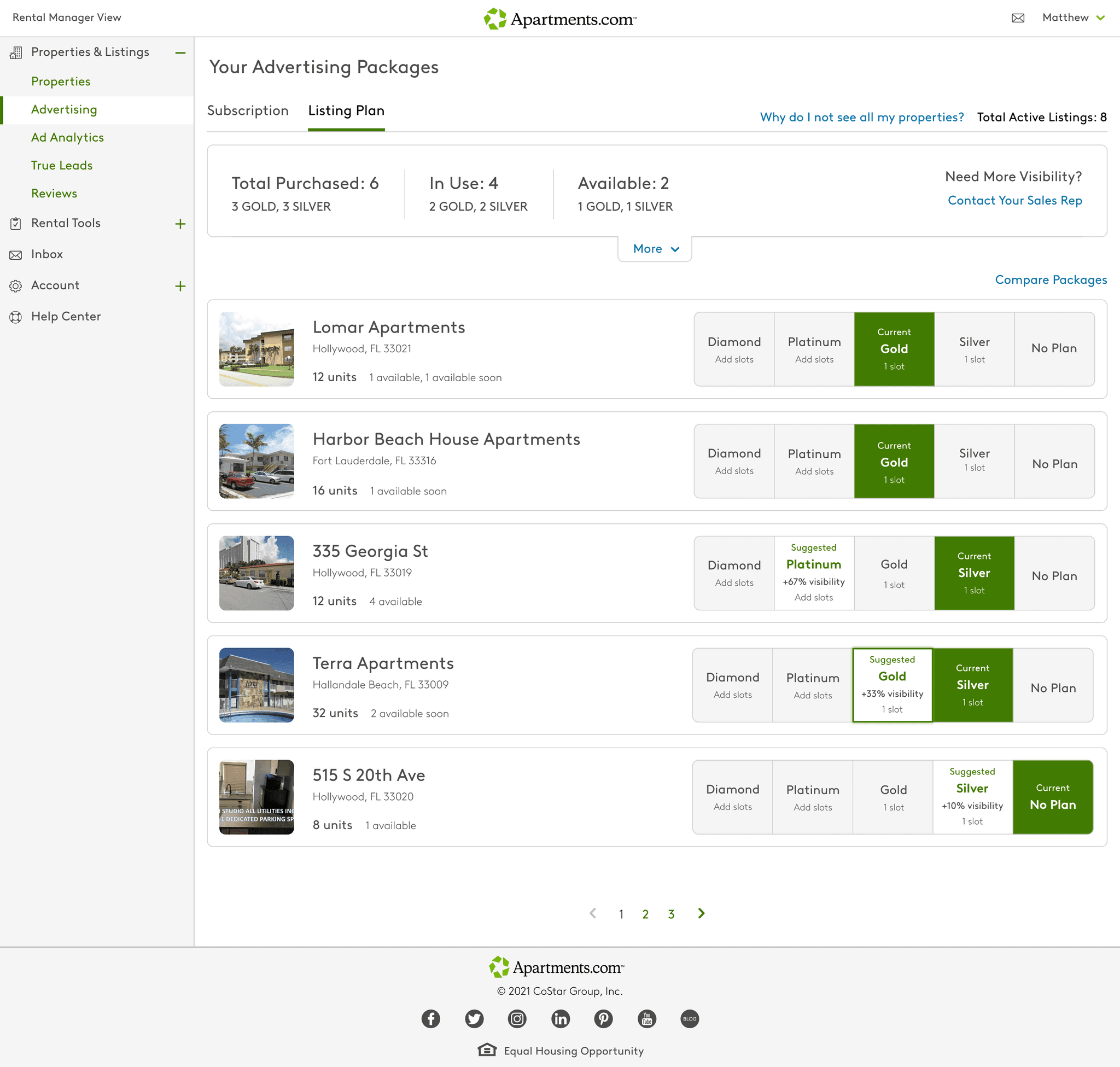
Final design
The final interface emphasized simplicity. Users could sort listings by property, city, availability, or package type, making it easy to identify which properties needed attention.
Key features



Usability testing
We tested the prototype with ten small property owners to ensure it matched their real-world workflows. Participants found the new structure clear and appreciated being able to see active, available, and unused listings in one place.
Positive feedback
Participants praised the flexibility and clarity of the new layout.
Areas of improvement
Some requested more package-level details, which informed future iterations of the interface.
Figma prototype
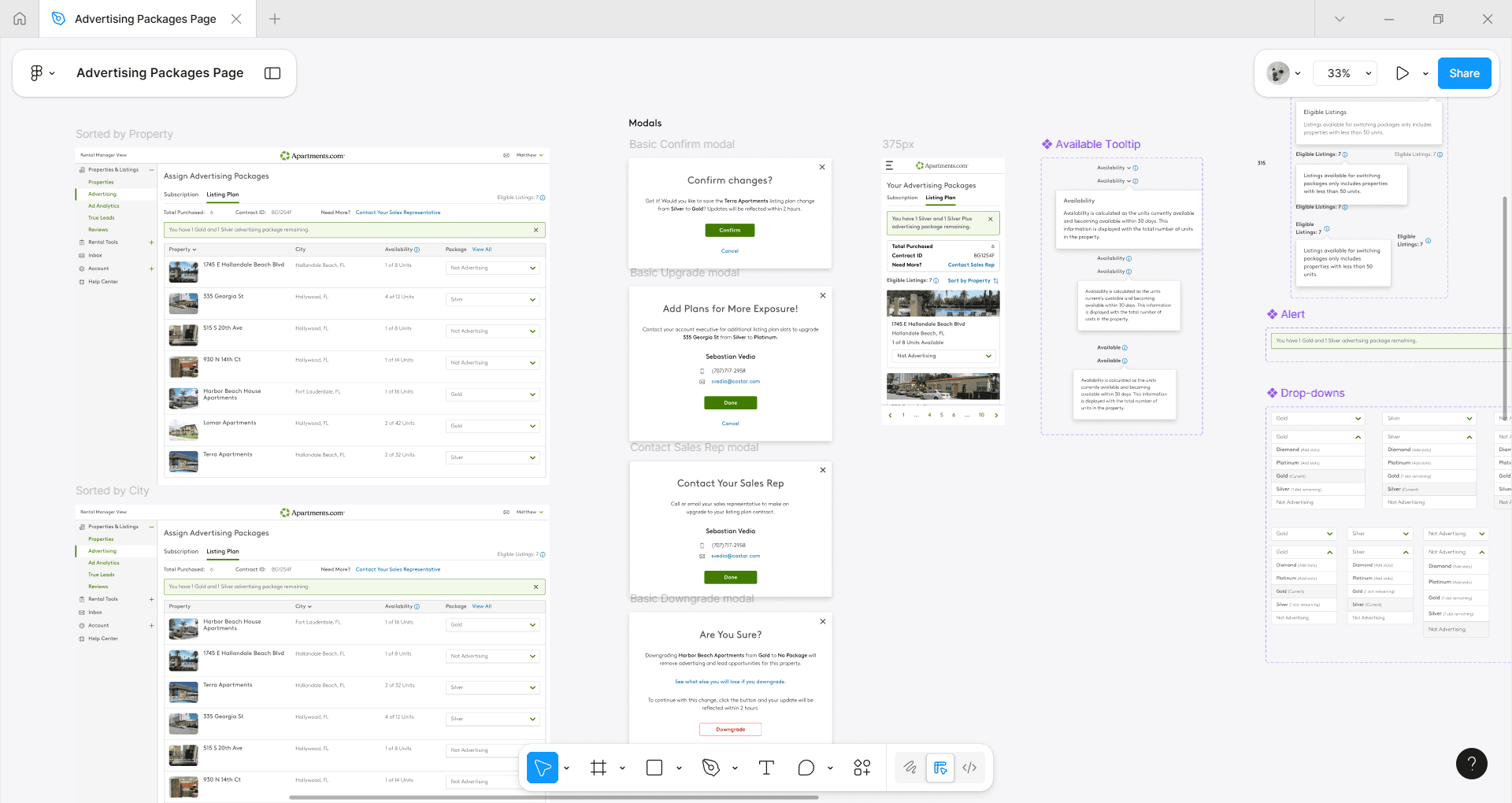
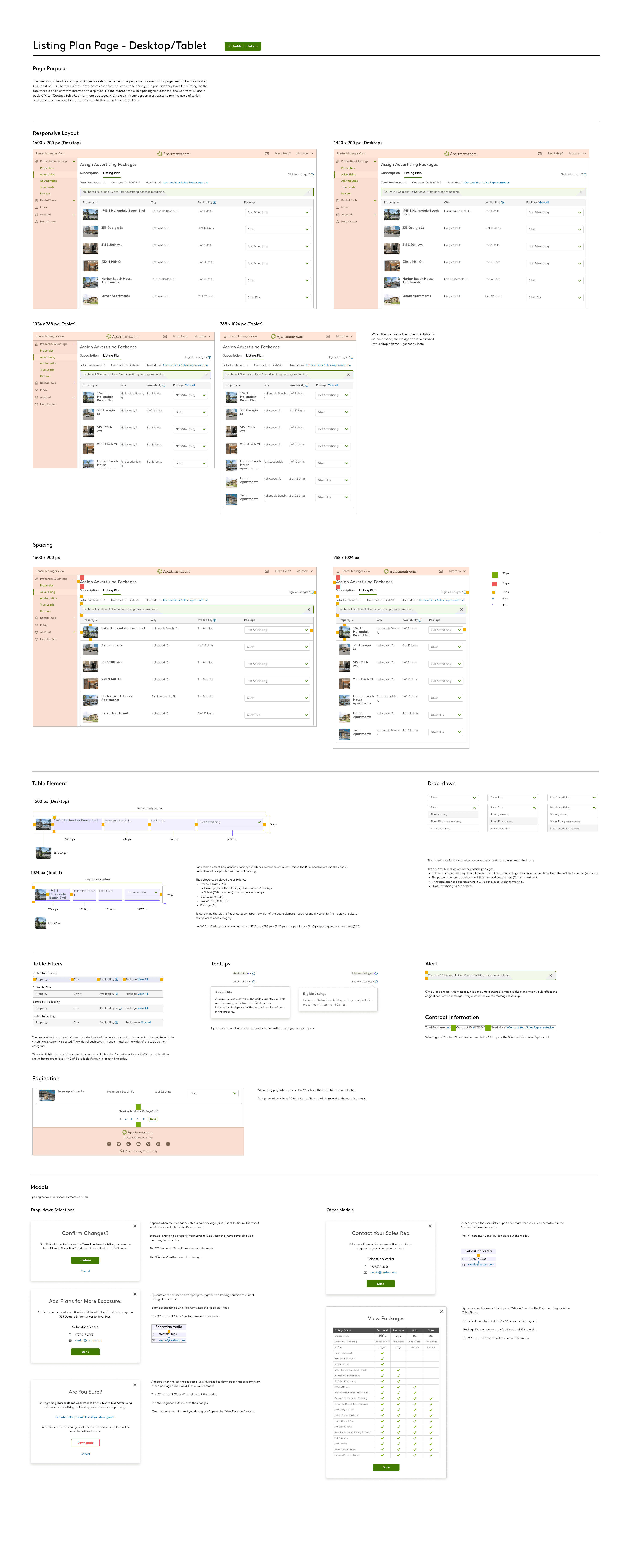
Every screen, every table, and every modal was designed to scale. The prototype detailed exactly how each element should behave at every breakpoint.
Developer handoff
To ensure implementation quality, we provided component-level documentation across all breakpoints. Each interaction, margin, and state was mapped out for developers, creating a single source of truth that supported faster and more reliable builds.

Conclusion
Small improvements in flexibility can create large business impact. By designing with the needs of smaller landlords in mind, we opened a path for growth while improving the experience for everyone.
More projects